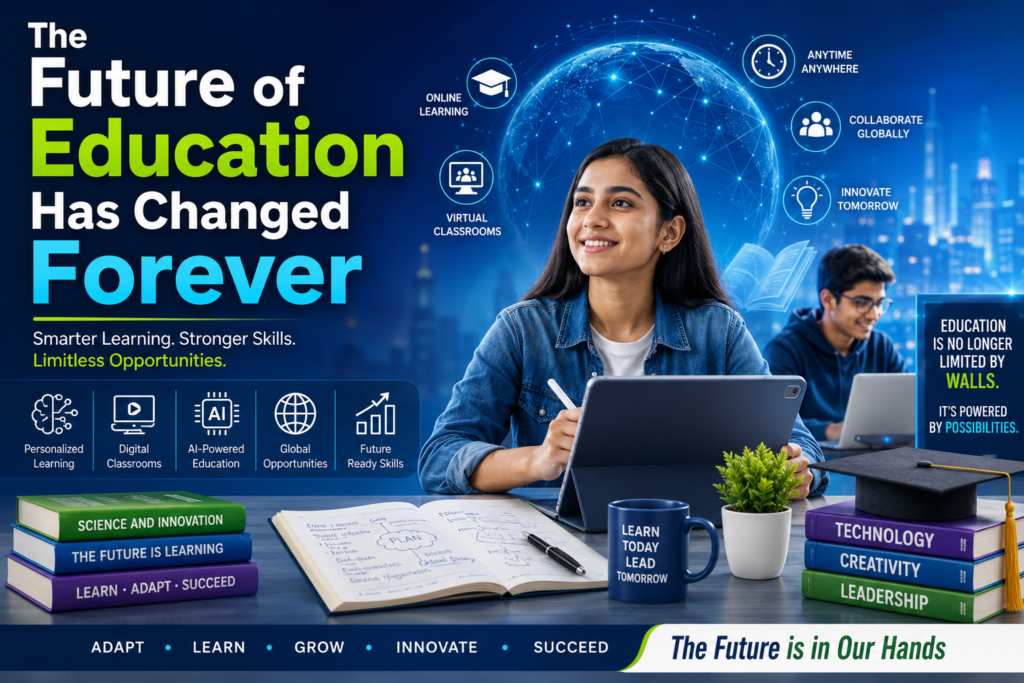
The Future of Education Has Changed Forever: Are Students Ready for What’s Next?
The way students learn today is very different from how education looked just a few years ago. Technology, artificial intelligence (AI), digital classrooms, online learning platforms, and evolving career opportunities are transforming education at an unprecedented pace. The classroom is no longer the only place where learning happens, and textbooks are no longer the only source of knowledge.
For students, parents, and educators, this transformation brings both exciting opportunities and new challenges. The future of education is no longer about memorizing facts—it’s about developing the skills to adapt, think critically, solve problems, and continue learning throughout life.
In this blog, we’ll explore how education is changing, what students need to succeed, and why choosing the right academic environment is more important than ever.
Education Is No Longer Limited to the Classroom
Today’s students have access to:
- Online learning platforms
- Interactive videos
- Virtual laboratories
- AI-powered learning tools
- Digital libraries
- Live expert sessions
These resources make learning more flexible and personalized. However, technology works best when combined with guidance from experienced teachers and a structured learning plan.
Artificial Intelligence Is Changing Learning
AI is becoming an important part of education by helping students:
- Receive personalized practice questions.
- Track learning progress.
- Identify weak areas.
- Learn at their own pace.
- Access instant explanations.
AI is a useful learning assistant, but it cannot replace teachers, mentors, classroom discussions, or human guidance.
Critical Thinking Is the New Superpower
Modern education values understanding over memorization.
Students who can:
- Analyze problems
- Think logically
- Apply concepts
- Solve real-world challenges
will be better prepared for competitive exams, higher education, and future careers.
Competitive Exams Are Becoming More Concept-Based
Exams such as JEE and NEET continue to emphasize conceptual understanding and problem-solving.
Students should focus on:
- Strong fundamentals
- Regular revision
- Daily practice
- Mock tests
- Time management
These habits are more valuable than relying solely on shortcuts or memorization.
Digital Skills Are Essential
Along with academic knowledge, students should develop skills such as:
- Computer literacy
- Digital communication
- Research skills
- Responsible use of technology
- Online collaboration
These abilities are increasingly important in higher education and the workplace.
Soft Skills Matter More Than Ever
Academic marks remain important, but employers and universities also value:
- Communication
- Leadership
- Teamwork
- Creativity
- Adaptability
- Emotional intelligence
Participating in extracurricular activities, presentations, and group projects helps students build these essential skills.
Lifelong Learning Is the New Normal
The careers of the future will continue to evolve.
Students should develop a mindset of continuous learning by:
- Staying curious.
- Reading regularly.
- Exploring new technologies.
- Learning beyond the syllabus.
- Embracing change.
The ability to learn new skills will remain valuable throughout life.
Parents Have a New Role
Parents are no longer just responsible for monitoring homework.
Today, they can support students by:
- Encouraging independent thinking.
- Promoting healthy technology use.
- Supporting career exploration.
- Creating a positive learning environment.
- Focusing on growth rather than only marks.
Positive guidance helps students become confident learners.
Teachers Remain Irreplaceable
Even with advanced technology, experienced teachers continue to play a vital role by:
- Explaining complex concepts.
- Inspiring curiosity.
- Providing mentorship.
- Offering emotional support.
- Encouraging critical thinking.
Technology enhances education—but great teachers bring learning to life.
Choosing the Right Junior College Matters
A future-ready junior college should provide:
- Experienced faculty
- Modern classrooms
- Integrated competitive exam preparation
- Personalized mentoring
- Technology-enabled learning
- Career guidance
- Holistic student development
The right educational environment prepares students for both exams and life beyond the classroom.
Healthy Study Habits Still Matter
No matter how education evolves, certain habits remain timeless:
- Study consistently.
- Revise regularly.
- Practice questions daily.
- Sleep well.
- Stay physically active.
- Manage time effectively.
Technology supports learning, but discipline drives success.
Preparing for Future Careers
Tomorrow’s careers will demand more than academic knowledge.
Students should focus on developing:
- Problem-solving skills
- Innovation
- Collaboration
- Digital literacy
- Ethical decision-making
- Adaptability
These qualities help students thrive in a rapidly changing world.
The Importance of Balance
While digital learning offers many benefits, balance is essential.
Students should:
- Limit unnecessary screen time.
- Spend time reading books.
- Participate in sports.
- Engage in hobbies.
- Build real-world social connections.
A balanced lifestyle supports better mental and physical well-being.
Final Thoughts
The future of education has changed forever, but one thing remains constant: students who are curious, disciplined, adaptable, and committed to learning will always have an advantage.
Technology, AI, and digital tools are transforming classrooms, but they work best when combined with experienced teachers, supportive parents, consistent study habits, and strong academic foundations.
As education continues to evolve, students should embrace change with confidence while focusing on timeless values such as hard work, conceptual understanding, and lifelong learning.
The future belongs to learners who are prepared not just for the next exam—but for the opportunities and challenges of tomorrow.
Frequently Asked Questions (FAQs)
1. How is education changing?
Education is becoming more technology-driven, personalized, and focused on conceptual learning, critical thinking, and lifelong skill development.
2. Will AI replace teachers?
AI can support learning by providing personalized practice and feedback, but teachers remain essential for mentorship, guidance, and classroom interaction.
3. What skills will students need in the future?
Students will benefit from developing critical thinking, communication, digital literacy, adaptability, collaboration, and problem-solving skills alongside academic knowledge.
4. How can parents prepare children for the future?
Parents can encourage curiosity, support healthy study habits, promote responsible technology use, and focus on overall development rather than marks alone.
5. Why is choosing the right junior college important?
A good junior college provides quality teaching, academic support, competitive exam preparation, mentoring, and opportunities that help students prepare for higher education and future careers.